2 min read · Updated 18 June 2026
The two share a name and a one-design philosophy, but they are different boats for different ends of the sport: the Melges 40 is a larger, canting-keel Grand Prix one-design designed by Botín Partners, while the Melges 32 is a smaller fixed-keel sportsboat designed by Reichel/Pugh. One is a powerful 12-metre thoroughbred; the other a hugely successful sub-10-metre sportsboat.
The headline differences
| Melges 40 | Melges 32 | |
|---|---|---|
| Length | ~12 m (≈40 ft) | ~9.7 m (≈32 ft) |
| Designer | Botín Partners | Reichel/Pugh |
| Keel | Canting keel | Fixed keel |
| Rudders | Twin rudders | Single rudder |
| Crew | ~8–10 | Up to ~7 |
| Downwind sail | Large asymmetric (gennaker) | Asymmetric spinnaker |
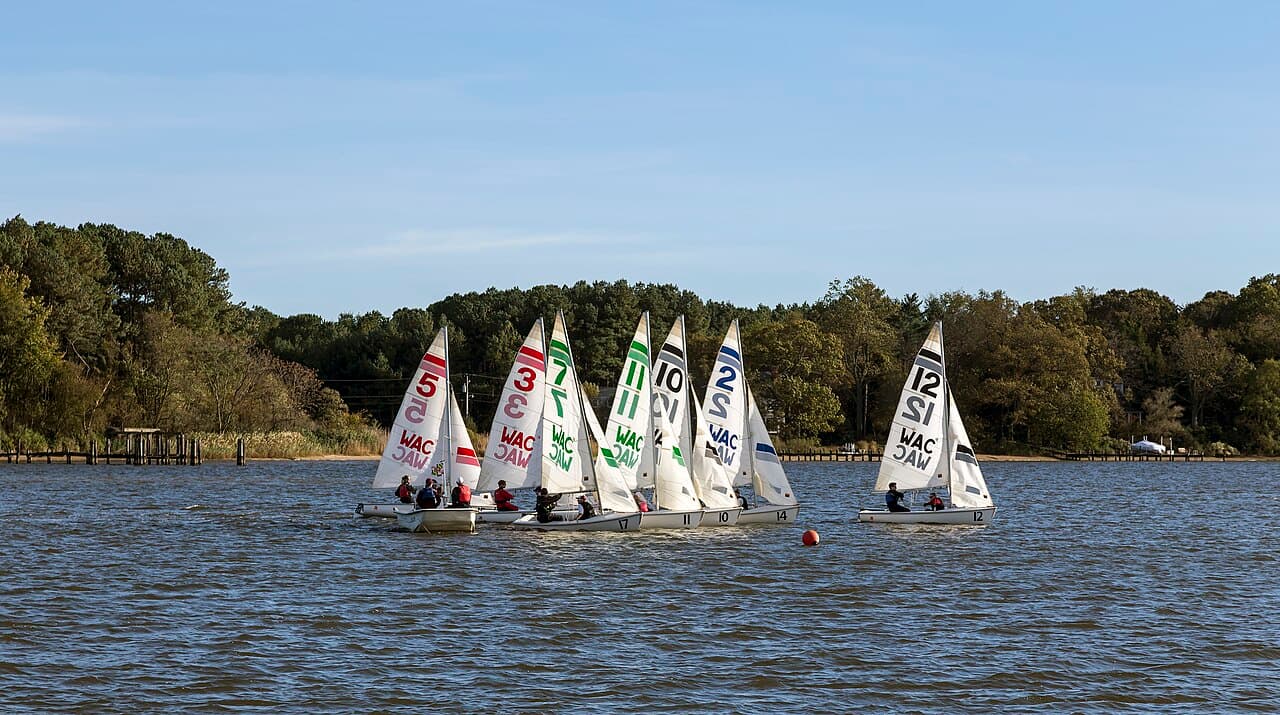
The Melges 32
The Melges 32 is a sportsboat in the truest sense: light, powerful for its size, and built to plane. At about 9.7 metres, with a Reichel/Pugh hull, a fractional carbon rig and a conventional fixed keel carrying lead ballast, it became one of the most successful Grand Prix sportsboat classes of its era. It flies an asymmetric spinnaker, races strictly one-design with a crew of around seven, and has the owner-driver, limited-professional culture that defines the genre.
The Melges 40
The Melges 40 takes the same one-design idea and scales it up into a higher-performance machine. At around 12 metres it is bigger, more powerful and more sophisticated: a Botín Partners design with twin rudders, a large square-top mainsail and a roughly 200-square-metre gennaker, sailed by a crew of eight to ten. Its defining feature is a canting keel — the ballast bulb swings to windward to resist the heeling force of the wind, adding power in a way the fixed-keel 32 cannot match. It is, in effect, what happens when sportsboat thinking is pushed to Grand Prix scale. For the full picture, see the Melges 40 explained.
Which sits where
Both are strict one-design classes where crew skill, not equipment, decides the result — but they answer different questions. The 32 is a brilliant, accessible sportsboat; the 40 is a larger, canting-keel weapon at the sharp end of grand-prix yacht racing, closer in intent to boats like the TP52. Invicta — see the boat — is a Melges 40, racing at that higher-performance end. For the language of both, see the sailing terms glossary.
Frequently asked questions
- What is the difference between a Melges 40 and a Melges 32?
- The Melges 40 is the larger and more powerful boat — around 12 metres, designed by Botín Partners, with a canting keel and twin rudders. The Melges 32 is a smaller sportsboat of about 9.7 metres, designed by Reichel/Pugh, with a conventional fixed keel. Both are strict one-design classes flying asymmetric spinnakers, but the 40 sits at a higher-performance, Grand Prix level.
- How big is the Melges 40 compared to the Melges 32?
- The Melges 40 is around 12 metres (about 40 feet) long, while the Melges 32 is about 9.7 metres (just under 32 feet). The 40 is not only longer but considerably more powerful, carrying a bigger rig and sail plan and a larger crew, and it uses a canting keel that the 32 does not have.
- Does the Melges 32 have a canting keel?
- No. The Melges 32 has a conventional fixed keel with lead ballast. The canting keel — which swings to windward to increase the boat's righting power — is a feature of the larger Melges 40, and is part of what places the 40 at a higher-performance level than the fixed-keel 32.
- How many crew do the Melges 40 and Melges 32 carry?
- The Melges 40 sails with a crew of about 8 to 10, while the Melges 32 typically races with a crew of up to 7 under its one-design rules. Both classes have an owner-driver culture with limits on professional sailors, reflecting their shared roots as strict, crew-skill-driven one-design classes.
- Who designed the Melges 40 and the Melges 32?
- The Melges 40 was designed by Botín Partners, the Spanish naval architects, while the Melges 32 was designed by the American firm Reichel/Pugh. Both are built and run as Melges one-design classes, but by different design teams and at different points in the size and performance range.