2 min read · Updated 25 June 2026
Beyond the sheets that set the angle of the sails, a set of controls shapes them — the cunningham, outhaul, boom vang, backstay and traveller. Where the sheets answer "what angle?", these answer "what shape?" — adjusting each sail's depth (how full it is) and twist (how much the top falls off) to match the wind. Knowing what each does turns trimming from guesswork into control.
Depth and twist — what you're controlling
Two properties define a sail's shape:
- Depth (or draft) — how deep and full the curve is. A fuller sail is more powerful; a flatter sail is less powerful but faster in a breeze.
- Twist — how much the top of the sail falls away from the wind relative to the bottom. Twist spills power from the top, useful in gusts.
Every control below adjusts one or both. The aim is a fuller, more powerful shape in light wind, and a flatter, more twisted, depowered shape in strong wind — layered on top of the basic sheeting.
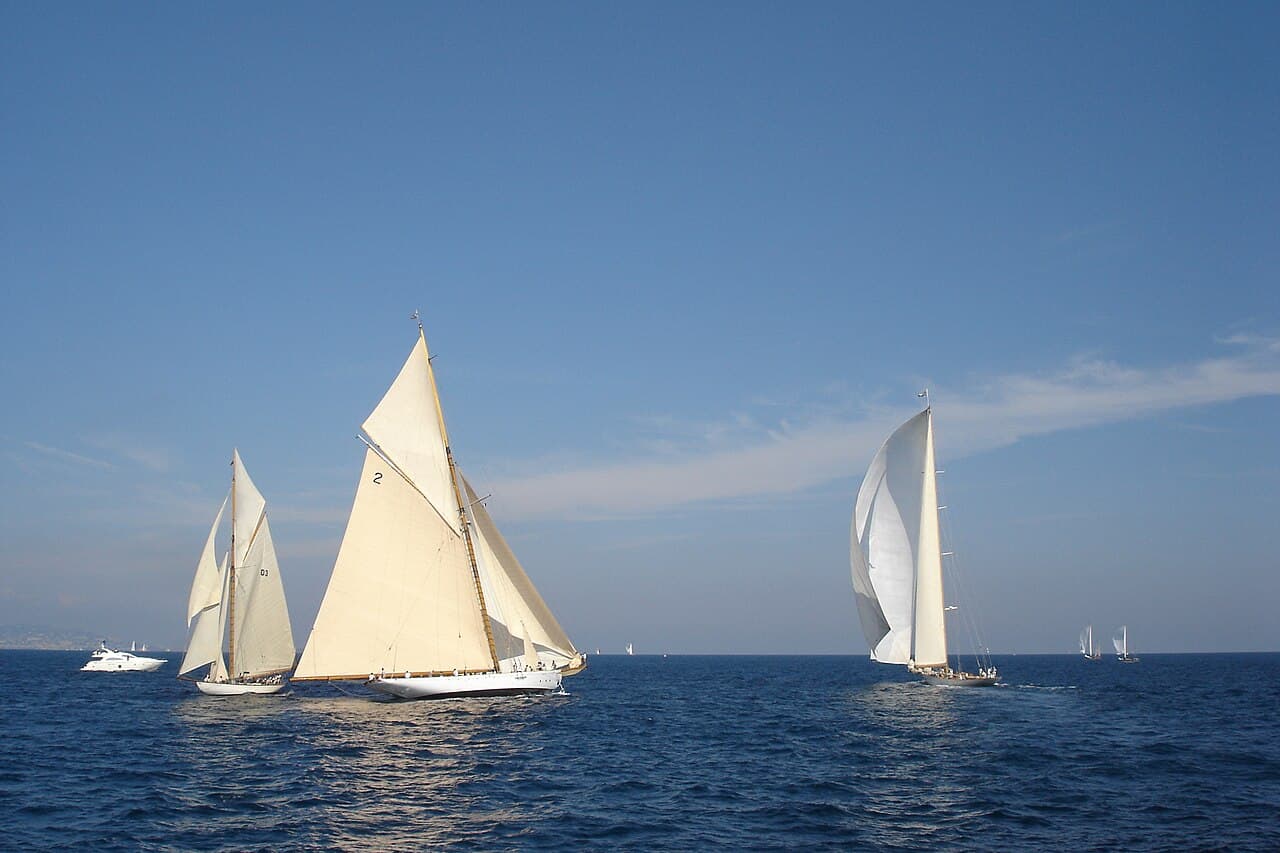
The mainsail controls
- Cunningham — tensions the luff (front edge). Pulling it on drags the draft forward and flattens the front, depowering the sail; easing it powers up. A fast way to adjust for the breeze.
- Outhaul — tensions the foot (bottom edge) along the boom. On flattens the lower sail; off makes it fuller.
- Boom vang (kicker) — pulls the boom down. Off the wind, when the mainsheet is eased, the vang controls leech tension and twist, stopping the top twisting open. Upwind the mainsheet does this, so the vang matters most downwind.
- Traveller — sets the boom's side-to-side angle without changing leech tension, as covered in how to trim sails.
The rig controls
- Backstay — tensioning it bends the mast (flattening the mainsail and opening its leech) and tightens the forestay (flattening the jib by removing luff sag). A powerful way to depower both sails together as the wind builds — part of tuning the rig.
Putting it together
None of these works in isolation — trimming a boat well means balancing them all: sheet for angle, cunningham and outhaul for mainsail shape, backstay for overall power, vang for downwind twist. In light air you power everything up; as it builds you progressively flatten and twist to depower and keep the boat on its feet. It sounds complex, but it comes down to one idea — shaping the wing for the conditions. On a racing boat these controls are led to hand for constant adjustment, as our guide to deck layout and sail controls describes, and the sailing terms glossary covers every term.
Frequently asked questions
- What are the main sail controls?
- Beyond the sheets that set the sails' angle, the main shape controls are the cunningham (luff tension), the outhaul (foot tension), the boom vang or kicker (leech tension off the wind), the backstay (mast bend and forestay tension), and the traveller (mainsail angle). Each changes the sail's depth or twist to tune it for the wind strength and point of sail.
- What does the cunningham do?
- The cunningham tensions the luff — the front edge — of the mainsail. Pulling it on pulls the deepest part of the sail (the draft) forward and flattens the front of the sail, which depowers it in stronger wind. Easing it lets the draft move aft for more power in lighter air. It is a quick way to adjust power as the breeze changes.
- What does the outhaul do?
- The outhaul tensions the foot of the mainsail, along the boom. Pulling it on flattens the lower part of the sail, reducing depth and power; easing it makes the lower sail fuller and more powerful. You flatten with the outhaul in strong wind and power up by easing it in light wind.
- What does the boom vang do?
- The boom vang, or kicker, pulls the boom down. Its main job is off the wind: when the mainsheet is eased on a reach or run, the vang holds the boom down to control leech tension and twist, stopping the top of the sail from twisting open and spilling power. Upwind, the mainsheet does this job, so the vang matters most downwind.
- What does the backstay do?
- Tensioning the backstay bends the mast and tightens the forestay at the same time. Bending the mast flattens the mainsail and opens its leech, depowering it; tightening the forestay reduces the sag in the jib's luff, flattening the jib too. So the backstay is a powerful depowering control in a building breeze, flattening both sails together.