2 min read · Updated 29 June 2026
Sailing in light airs is one of the subtlest skills in the sport. When there's barely a breeze, keeping a boat moving takes patience, delicacy and a completely different technique from sailing in a blow. The principles: heel to leeward, keep still, sail free for speed, and be gentle on the helm — all in the service of preserving the precious little momentum you have.
Heel to leeward
In a breeze you keep the boat flat; in light air you do the opposite and heel it to leeward. This:
- Lets gravity give the sails their shape when there isn't enough wind to fill them.
- Reduces the wetted area of the hull, cutting drag.
- Lets the sails hang open rather than collapsing.
This deliberate leeward heel is a signature of the good light-airs sailor.
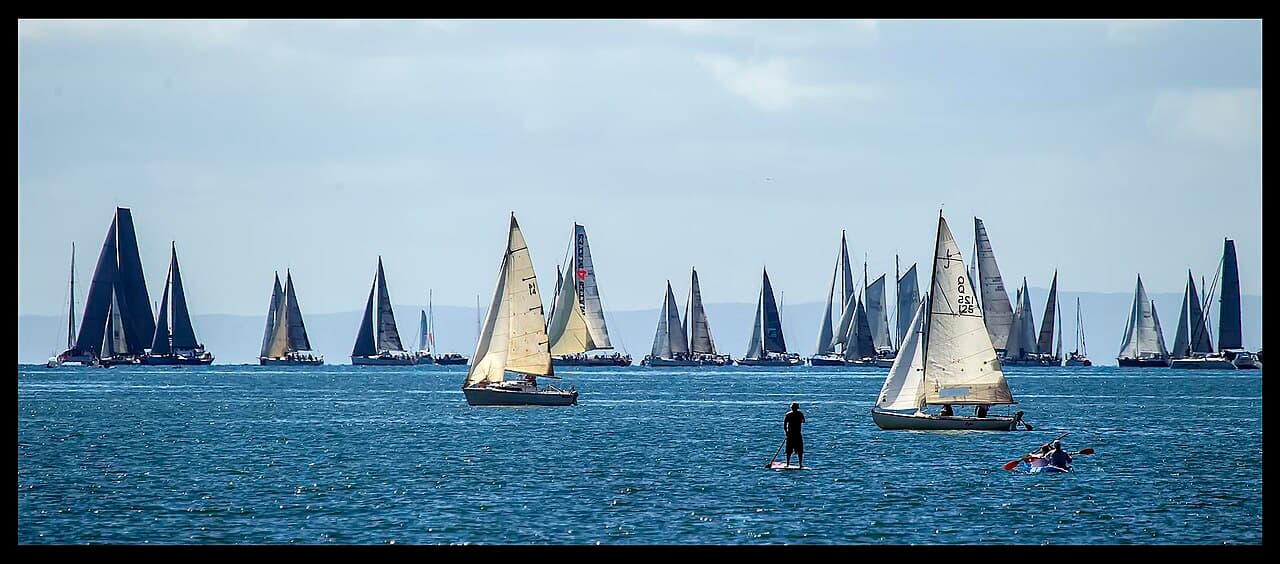
Keep weight low and still
Sudden movement is the enemy. A lurch shakes the wind out of the sails, and in light air there's not enough breeze to refill them quickly — so every jolt costs speed. Keep crew weight low, forward and settled, and move slowly and smoothly. Preserving momentum is everything, because it's slow and hard to rebuild once lost.
Sail free, not high
Resist the urge to pinch up towards the wind. With so little power, sailing too close stalls the sails and the boat stops. Instead ease off a few degrees and sail a touch lower and faster — the flow stays attached, the boat keeps moving, and a moving boat builds its own apparent wind that adds to what little there is. Speed first, pointing second.
Trim gently and read the water
Ease sheets a little to open the sails, watch the telltales for attached flow, and trim with a light touch. Above all, read the wind: look for darker ripples on the water marking a patch of breeze, watch flags and smoke ashore, and steer towards the next puff. In light air the wind is patchy and shifty, and patient, constant observation is what separates the boats that keep moving from those left sitting becalmed. For the vocabulary, see the sailing terms glossary.
Frequently asked questions
- How do you sail in very light wind?
- In light airs you keep the boat moving by reducing drag and helping the sails set. Heel the boat to leeward so gravity gives the sails their shape and the wetted area of the hull is reduced, keep crew weight low, forward and very still, ease sheets a little and sail slightly freer to build speed, and steer gently with minimal rudder movement. The goal is smooth, unhurried sailing that keeps flow over the sails rather than stalling them.
- Why do you heel the boat to leeward in light winds?
- Heeling to leeward in light air does two useful things: gravity helps the sails fall into their proper aerofoil shape when there is not enough wind to fill them, and tipping the boat reduces the amount of hull dragging in the water, cutting drag. It also lets the sails hang open rather than collapsing. This deliberate leeward heel is one of the signatures of a good light-airs sailor, and the opposite of what you do in a breeze.
- Why keep still when sailing in light airs?
- Because sudden crew movement disturbs the boat and shakes the wind out of the sails, and in light air there is not enough breeze to refill them quickly, so every lurch costs speed. Moving slowly and smoothly, and keeping weight settled low in the boat, lets the sails keep their shape and the boat keep its momentum. Preserving the little speed you have is everything in light conditions, because it is slow and hard to rebuild once lost.
- Should you pinch or sail free in light wind?
- Sail free — a little lower and faster — rather than pinching up close to the wind. In light airs there is not enough power to point high, so trying to sail too close to the wind stalls the sails and the boat slows to a stop. Easing off a few degrees keeps the flow attached and the boat moving, and a moving boat generates its own apparent wind that adds to what little there is. Speed first, pointing second, is the light-air rule.
- How do you read the wind in light airs?
- You look for the faintest signs: darker ripples on the water marking a patch of breeze, the set of flags and smoke ashore, telltales and the masthead indicator, and the feel of the wind on your face and neck. In light conditions the wind is often patchy and shifty, so spotting the next puff and steering towards it can make a big difference. Constant, patient observation is what separates boats that keep moving from those that sit becalmed.