2 min read · Updated 18 June 2026
Twin rudders give a wide, powerful yacht reliable steering at high heel angles and high speed. When such a boat leans, a single rudder on the centreline would lift towards the surface and lose grip — so fast modern designs angle two rudders out to the sides, so that whichever one is to leeward stays deep, vertical and biting. It is one of the clearest examples of hull shape driving the gear a boat carries.
The problem twin rudders solve
A modern performance yacht is wide and powerful, and it sails heeled and fast. That creates a steering problem. A single rudder hung on the centreline points straight down when the boat is upright, but as the boat heels it swings towards the horizontal — lifting towards the surface, losing immersed blade area, and risking ventilation, where air is drawn down the back of the rudder and it stalls. The result is a loss of steering control just when the boat is most powered up.
How two rudders fix it
The answer is to fit two rudders, one each side of the centreline, canted outboard. Now, when the boat heels:
- the leeward rudder is pushed deeper into the water and stands close to vertical — fully immersed and gripping hard;
- the windward rudder lifts towards the surface, where it is doing little anyway.
The helm steers both through the same linkage, but it is the leeward blade that carries the load. Across the whole range of heel angles the boat always has a deep, effective rudder in the water. This pairs naturally with a canting keel and a wide hull, which together let the boat carry sail and sail fast and flat-ish.
Which boats use them
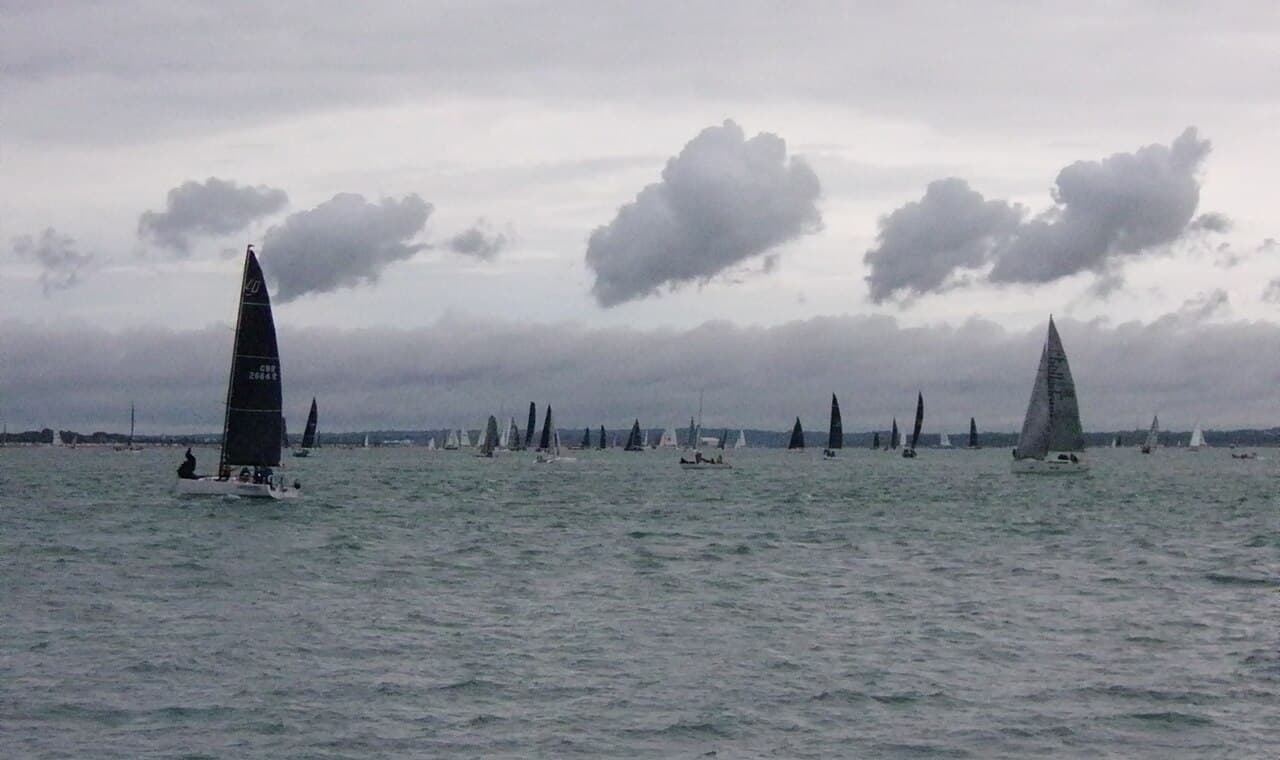
Twin rudders are now standard on wide, high-performance designs — planing sportsboats, many canting-keel grand-prix yachts, offshore IMOCA and Class40 racers, and beamy performance cruisers. The Melges 40 runs twin rudders to suit its wide, powerful, canting-keel hull. Narrow, traditional yachts that don't heel as hard or sail as fast still use a single centreline rudder, because for them the extra weight, drag and complexity of two blades wouldn't pay off.
The trade-off
Nothing is free. Two rudders add weight, wetted-surface drag and mechanical complexity, and at low speed a single rudder can feel more direct. The configuration only earns its place on boats that sail wide, fast and hard-heeled — exactly the boats it is found on. For the rest of the language, see the sailing terms glossary.
Frequently asked questions
- Why do some yachts have two rudders?
- Wide, powerful boats heel a long way and sail at high speed, and a single rudder on the centreline can lift towards the surface and ventilate (suck air down the blade) when the boat leans, losing grip. Twin rudders are angled out to each side so that when the boat heels, the leeward rudder is pushed deeper and stays vertical and fully immersed, keeping positive steering control.
- How do twin rudders work?
- The two rudders are mounted either side of the centreline and canted outboard. Upwind, when the boat is heeled, the leeward rudder is the one doing the work — it is driven deeper into the water and presents a near-vertical blade, while the windward rudder lifts towards the surface. Both are linked to the same steering system, so the helm controls them together.
- Which boats use twin rudders?
- Twin rudders are common on modern wide, high-performance boats — planing sportsboats, many canting-keel Grand Prix yachts, offshore IMOCA and Class40 racers, and beamy performance cruisers. The Melges 40, for example, runs twin rudders to match its wide, powerful, canting-keel hull.
- What is the downside of twin rudders?
- Two rudders add weight, complexity and drag compared with one, and at low speed or low heel a single rudder can feel more direct. The trade-off only pays off on boats that sail wide and fast and heel hard, which is why narrow, traditional yachts still use a single centreline rudder.
- Do twin rudders help downwind?
- Yes. Downwind at speed a planing boat can be a handful, and having a deep, well-immersed leeward rudder helps the helm hold control through gusts and waves rather than the blade ventilating and the boat broaching. Reliable steering at high speed and heel is the whole point of the configuration.