2 min read · Updated 18 June 2026
A spinnaker is a large, lightweight sail flown ahead of the boat for sailing downwind and across the wind. Made of thin nylon, it balloons out to scoop up as much air as possible, giving far more power off the wind than the ordinary upwind sails — and it is the big, billowing, often vividly coloured sail you see on racing yachts running downwind.
What it does
Going upwind, a boat uses flat, wing-like sails. But once it turns off the wind — downwind or across the wind — those sails can no longer generate enough power, because the boat is now being pushed along rather than sucked forward. The spinnaker solves this: a huge, light, deeply curved sail that catches the wind and drags the boat along, dramatically increasing downwind speed. Crews hoist it for the downwind legs and drop it again before turning back upwind, as described in spinnaker hoists and drops.
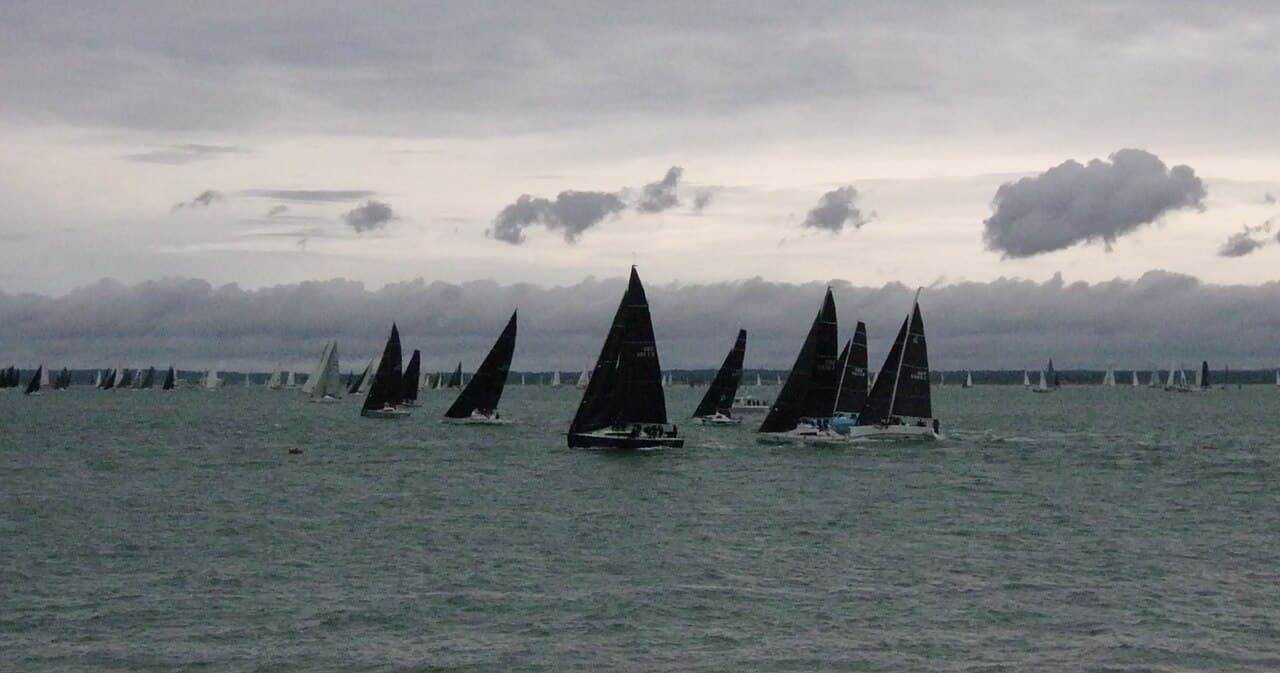
The two families
Spinnakers come in two broad types, covered in detail in spinnaker vs gennaker:
- Symmetric spinnaker — the traditional balloon-shaped sail, set with a pole off the mast and used for sailing dead downwind. It is symmetrical, so either side can be the leading edge.
- Asymmetric spinnaker (often a gennaker) — has a fixed tack, flown from a bowsprit out the front, and shaped more like an oversized jib. It excels at reaching across the wind at speed, which is why fast modern boats — including the Melges 40, with its big asymmetric — favour it.
Why they are colourful
Spinnakers are made from lightweight nylon that takes bright dye well, and because the downwind sail is the most visible part of a boat, teams use bold colours and sponsor branding. The colour is about identity and visibility, not speed — but it is why a downwind fleet under spinnaker is one of the great sights in sailing.
Skill and teamwork
Handling a spinnaker is one of the harder parts of sailing. Unlike the other sails it is not attached along a stay, so hoisting, gybing and dropping it cleanly takes a well-drilled crew — and a mishandled spinnaker can cost places or cause a broach. It is a big reason crew work matters so much, as explained in crew positions. For more, see the full guide to the sails of a grand-prix yacht and the sailing terms glossary.
Frequently asked questions
- What is a spinnaker?
- A spinnaker is a large, lightweight sail flown from the front of a boat for sailing downwind and across the wind. Made of thin nylon or polyester, it balloons out ahead of the boat to catch as much air as possible, giving far more power off the wind than the regular upwind sails. It is the big, often colourful sail you see on racing yachts running downwind.
- What are the two types of spinnaker?
- There are two families. A symmetric spinnaker is the traditional balloon-shaped sail, flown from a pole and used for sailing dead downwind. An asymmetric spinnaker, often called a gennaker, has a fixed tack and is flown from a bowsprit, and is better for reaching across the wind at speed. Modern fast boats mostly use asymmetrics.
- When do you use a spinnaker?
- A spinnaker is used off the wind — sailing downwind or across the wind — where the regular jib cannot generate enough power. As soon as a boat turns away from the wind and onto a downwind leg, the crew hoists the spinnaker for the extra drive, then drops it again before turning back upwind.
- Why are spinnakers so colourful?
- Spinnakers are made from lightweight nylon that takes bright dye well, and teams use bold colours and sponsor branding because the big downwind sail is the most visible part of the boat. The colour is mostly identity and visibility rather than performance, though it makes a downwind fleet a spectacular sight.
- Is a spinnaker hard to use?
- It takes skill and teamwork. Hoisting, gybing and dropping a big spinnaker cleanly is one of the trickier parts of sailing, because the sail is large, powerful and not attached along a stay like the other sails. Good crews drill these manoeuvres until they are smooth, since a mishandled spinnaker can cost places or cause a broach.