Brisbane to Gladstone Yacht Race
The Brisbane to Gladstone is a 308-nautical-mile Easter ocean classic run since 1949 by the Queensland Cruising Yacht Club, from Moreton Bay to Gladstone Harbour.
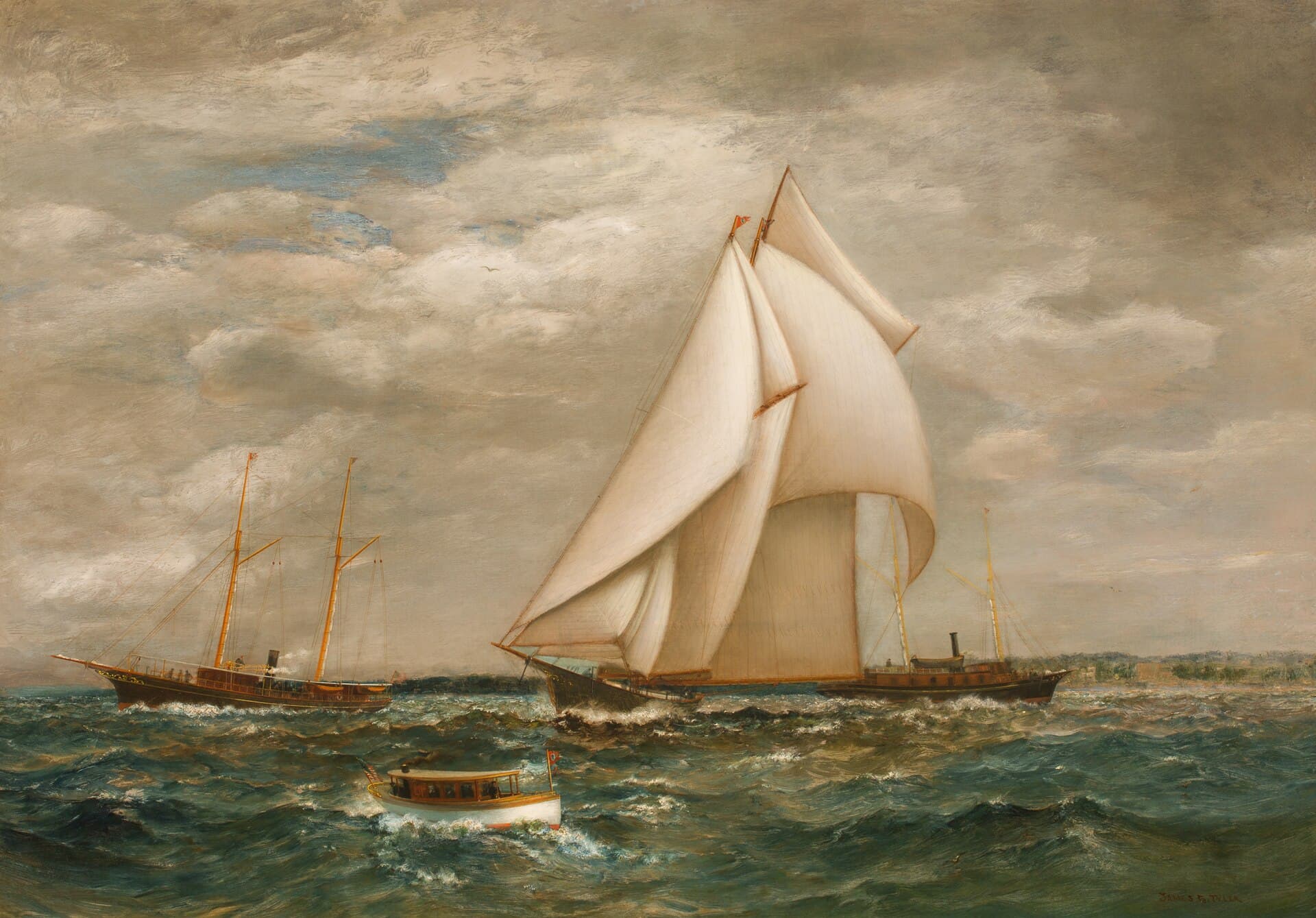
Photo: James Gale Tyler, Public domain, via Wikimedia Commons
6 min read
The Brisbane to Gladstone Yacht Race is a 308-nautical-mile blue-water passage race run every Easter since 1949 by the Queensland Cruising Yacht Club, taking the fleet from a start line in Moreton Bay, north up the Queensland coast, to the finish in Gladstone Harbour. It is one of Australia's oldest and most prestigious ocean races, traditionally starting on Good Friday, and it is contested both for line honours and for the Courier Mail Cup on corrected time.
What it is
The Brisbane to Gladstone — known simply as "the Gladstone" or B2G — is a point-to-point offshore race rather than a series of inshore windward-leeward heats. Crews leave Moreton Bay and sail through the night up the coast, working tides, headlands and the prevailing breeze, until they reach Gladstone Harbour. It is a true offshore passage race: one start, one finish, and a day or more of continuous sailing in between.
Because it spans the Easter long weekend, the race has become as much a fixture of the Queensland calendar as a sporting contest. It draws a broad fleet — from professionally crewed maxis chasing the record to family cruiser-racers — and the host city turns the finish into a festival.
History
The Queensland Cruising Yacht Club was formed in 1948 with the express purpose of running an Easter ocean race to Gladstone, and the first Brisbane to Gladstone was held the following Easter, in 1949. That inaugural race is part of the event's folklore: a small fleet started, and because few carried radios, carrier pigeons were used so the boats could report their positions back to shore.
From those modest beginnings the race grew into one of the largest and most respected ocean races in the country, contested continuously for more than seven decades. Over that span the event has built a deep roll of honour, with celebrated yachts returning Easter after Easter. Few Australian races can claim such an unbroken lineage, which is a large part of why the Courier Mail Cup, awarded since 1949, is considered one of the country's most historic perpetual trophies.
The course
The race begins in Moreton Bay, on a start line set roughly two nautical miles east of Shorncliffe Pier — close enough that spectators line the pier and foreshore to watch the fleet get away. From there the boats clear the bay and turn north into open water for the run up the Queensland coast.
The 308-nautical-mile course is a coastal passage, so navigation matters as much as boat speed. Crews must balance staying offshore in cleaner breeze against the shorter distance of a tighter coastal line, while managing the East Australian Current and the wind shifts that come with passing headlands. The finish is in Gladstone Harbour, where the leading boats typically arrive through the night or early morning after the Good Friday start. For a fuller explanation of the sailing language used here, see the sailing terms glossary.
The fleet and classes
The Gladstone fleet is deliberately broad. At one end are grand-prix racing yachts and supermaxis built for outright speed; at the other are cruiser-racers and club boats sailed by amateur crews. Multihulls also compete and are sent away on their own start, separate from the monohulls.
This mix is possible because the race is scored several ways at once. Alongside line honours, boats race on corrected time, with the IRC handicap result deciding the Courier Mail Cup and a Performance Handicap System division opening the race to almost any well-found yacht regardless of size or design. The principles behind these systems are covered in IRC vs ORC handicap racing, and the role of strict one-design classes — such as the Melges 40 — within wider mixed fleets is explained in its own guide. You can see how Invicta's own season fits around fixtures like this on our programme, and read more about the boat on the boat page.
Line honours vs handicap
As with most Australian ocean races, there are two contests running at the same time, and they are often won by very different boats. Line honours goes to the first yacht across the finish — almost always one of the largest, most powerful boats in the fleet, and the one that draws the headlines and the record attempts. Black Jack set the existing course record of 16 hours, 53 minutes and 57 seconds in 2018, which needs a sustained following breeze down the coast.
The Courier Mail Cup, however, is the prize the whole fleet can realistically win, because it is decided on corrected time under IRC. Handicapping levels the field so that a well-sailed smaller boat can beat a maxi once elapsed times are adjusted for rating. That distinction — fastest boat versus best-performing boat — is the heart of offshore racing, and it is explained in detail in line honours vs handicap.
How to enter
Entries are managed by the Queensland Cruising Yacht Club under the event's Notice of Race, published each year in the lead-up to Easter, which sets out closing dates, fees, divisions and the rules that apply.
Because this is a genuine offshore passage well out of sight of land, the safety requirements are serious. The race is run under the Australian Sailing Special Regulations, and entrants must satisfy the relevant offshore safety category before they are accepted. In practice that means a safety audit of the boat, the prescribed offshore equipment — life raft, EPIRB, harnesses and jacklines, storm sails, communications and medical kit among it — and crew who hold the required sea-survival and first-aid qualifications and can show appropriate offshore experience. Skippers should treat preparation as a months-long task and work directly from the current Notice of Race and the club's instructions.
How to follow
The most reliable way to follow the race is the live tracker linked from the official event website across the Easter weekend, which shows the fleet's progress up the coast in close to real time. The start is a spectacle in its own right and is best seen from Shorncliffe Pier and the Moreton Bay foreshore, where the fleet forms up before heading north.
At the northern end, Gladstone hosts the finish and the presentations, and the arrival of the leading boats — often in the dark or at first light — is a highlight of the local Easter calendar. Results, standings and reports are posted by the organisers and carried by Australian sailing media throughout the weekend.
Frequently asked questions
- When is the Brisbane to Gladstone Yacht Race held?
- The race is held every year over the Easter long weekend and traditionally starts on Good Friday. Tying the start to Easter is part of the event's identity and has been since the first race in 1949. The leading boats generally reach Gladstone within a day, while the rest of the fleet arrives over the Easter weekend.
- How long is the Brisbane to Gladstone Yacht Race?
- The course is 308 nautical miles, run from a start line in Moreton Bay near Shorncliffe, north up the Queensland coast to the finish in Gladstone Harbour. It is one of Australia's classic blue-water passage races, sitting alongside the Sydney to Hobart among the long-established east-coast ocean races.
- Who organises the Brisbane to Gladstone Yacht Race?
- The race is organised by the Queensland Cruising Yacht Club (QCYC), which was formed in 1948 specifically to run the event. The first race followed at Easter 1949. The club has administered it continuously ever since, making QCYC one of the custodians of Australian offshore racing history.
- Where does the race start and finish?
- The fleet starts from a line in Moreton Bay, set roughly two nautical miles east of Shorncliffe Pier, which gives spectators a clear view from the pier and foreshore. From there the course runs north up the Queensland coast and finishes in Gladstone Harbour, where the city traditionally hosts the fleet over the Easter weekend.
- What is the Courier Mail Cup?
- The Courier Mail Cup is the trophy awarded to the overall winner on corrected time under IRC handicap. It is one of the oldest perpetual trophies in Australian sport to have been contested continuously, dating back to the inaugural 1949 race, and winning it is regarded as the premier prize of the event ahead of line honours.
- What is the race record?
- The fastest elapsed time belongs to the supermaxi Black Jack, which completed the course in 16 hours, 53 minutes and 57 seconds in 2018, at an average speed of about 18 knots. Records like this depend heavily on the weather, and a fast time generally needs a sustained following breeze down the coast.
- How do you enter the Brisbane to Gladstone Yacht Race?
- Entry is made through the Queensland Cruising Yacht Club under the event's Notice of Race, which is published each year ahead of Easter. As a long offshore passage, the race carries demanding safety requirements under the Australian Sailing Special Regulations, and entrants must meet the relevant offshore safety category, carry the prescribed equipment, and have adequately qualified and experienced crew before they are accepted.
- What classes and divisions race?
- The fleet is mixed, spanning grand-prix racing yachts, cruiser-racers and multihulls. Boats compete for line honours and are also scored on corrected time, with the IRC Courier Mail Cup as the headline handicap prize and a Performance Handicap System division that lets a wide range of boats compete fairly regardless of size or design. Multihulls start separately from the monohull fleet.
- How can I follow the race?
- Yachts carry trackers, so the simplest way to follow the fleet is the live tracker linked from the official event website over the Easter weekend. The start in Moreton Bay can be watched from Shorncliffe Pier and the surrounding foreshore, and the finish and presentations take place in Gladstone, with results and reports posted by the organisers and Australian sailing media.
More regattas
Rolex Sydney Hobart Yacht Race
The Rolex Sydney Hobart is a 628-nautical-mile offshore classic from Sydney to Tasmania, run by the CYCA and starting every Boxing Day.
Read the guideSail Paradise
Sail Paradise is Southport Yacht Club's signature offshore regatta on the Gold Coast, with windward-leeward and passage racing across multiple divisions over a long weekend.
Read the guideAirlie Beach Race Week
Airlie Beach Race Week is the Whitsunday Sailing Club's August regatta — tropical island racing off Airlie Beach, paired with the Whitsundays Festival of Sailing.
Read the guide