Bunbury and Return Ocean Race
The Bunbury and Return Ocean Race is a 170nm offshore passage from Fremantle south to Bunbury and back, run each February by Royal Freshwater Bay Yacht Club since 1948.
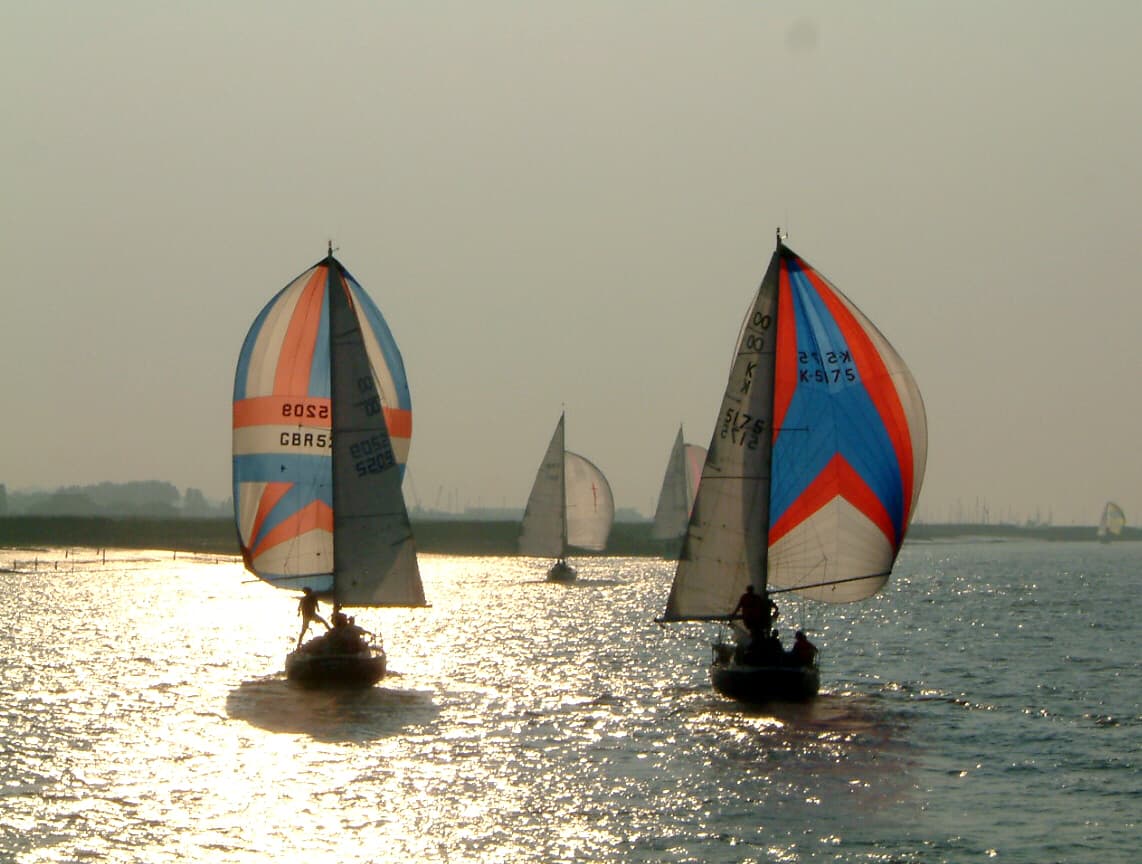
Photo: greenacre8, CC BY 2.0, via Wikimedia Commons
5 min read
The Bunbury and Return Ocean Race is a 170 nautical mile offshore passage race run each February by the Royal Freshwater Bay Yacht Club, sending the fleet south from Fremantle to a turning mark off Bunbury and back — and it is the oldest ocean race in Western Australia. First sailed in 1948, it remains the cornerstone of the state's blue-water calendar: a single overnight leg down a long, exposed coast that rewards crews who can manage tactics, fatigue and a shifting summer breeze in equal measure.
What it is
The Bunbury and Return is a point-to-point offshore race rather than a windward-leeward contest. The fleet leaves Fremantle, heads out to sea and turns south, running roughly 85 nautical miles down the coast to a turning mark laid off Bunbury, then beats or reaches its way back north to the finish off Fremantle. At about 170 nautical miles all up, it is short by the standards of an ocean classic such as the Rolex Sydney Hobart, but long enough to demand proper offshore preparation, night sailing and category-rated safety equipment.
It is part of the Ocean Racing WA series and is organised in partnership with the Koombana Bay Sailing Club at the Bunbury end. The race draws a broad keelboat fleet, scored under recognised handicap systems so that boats of very different sizes can compete on equal terms.
History
The race traces its origins to 1948, when the idea of an ocean race to Bunbury was proposed at the Royal Freshwater Bay Yacht Club, encouraged by the inauguration of the Sydney to Hobart a few years earlier. The club resolved to mount an equivalent challenge on the west coast.
A fleet of yachts entered the inaugural race, which began in February 1948 from a start inside Fremantle Harbour. From 1949 the event became the round-trip Bunbury and Return Ocean Race in the form sailed today, and it has run as the senior fixture of Western Australian ocean racing ever since — the oldest ocean race in the state.
The course
The modern course starts off North Fremantle. From there the fleet works offshore and turns south, settling into a long run or reach down the coast toward Bunbury. This southbound leg is where the race is often won: a steady summer south-easterly or sea breeze can let a quick boat hold one gybe for miles, while a soft or shifting night can stretch the fleet out badly.
At Bunbury the boats round a turning mark before heading back north to the finish off Fremantle. The return leg frequently becomes the harder test — crews are tired, the breeze direction has often changed with the day-night cycle, and the run home can turn into a beat. The lack of a coastline full of marks means navigation, weather reading and sail selection matter more than local knowledge of any single headland. As a guide to the language used in race documents and on board, the sailing terms glossary is a useful companion.
The fleet and classes
The Bunbury and Return attracts a mixed offshore fleet, from grand-prix raceboats to well-found cruiser-racers. The sharp end has historically been contested by fast, professionally crewed designs of the type associated with grand prix yacht racing, while the bulk of the entry is made up of production and custom keelboats racing under handicap.
Boats are typically split into divisions by size and rating, with a separate double-handed division for two-person crews, a discipline that continues to grow across Australian offshore racing. While the Bunbury and Return is an open offshore race rather than a strict one-design event, the fleet does include classes that race elsewhere as tightly matched fleets, such as the Melges 40. Each entry must meet the safety category set for the race in the notice of race.
Line honours versus handicap
As with most offshore races, there are two contests running at once. Line honours simply goes to the first yacht to cross the finish off Fremantle — usually the largest, fastest boat in the fleet — and is the headline most associated with the race record, which in recent years has been held by fast TP52-type designs.
The overall winner, however, is decided on corrected time under handicap, so a well-sailed smaller boat can beat the line-honours yacht once ratings are applied. Results are calculated under IRC and PHS. If you are new to how these systems differ, our explainers on line honours versus handicap and IRC versus ORC handicap racing set out exactly how a slower boat can still take the trophy.
How to enter
Entry is handled by the Royal Freshwater Bay Yacht Club through the notice of race published ahead of each February edition. Yachts must hold a current handicap rating for their chosen division, carry the required offshore safety equipment for the race category, and field a crew with the relevant sea-safety and qualifying experience. Skippers should read the notice of race and sailing instructions carefully, as safety requirements and the exact start time are set there. Invicta's racing commitments and how to get involved with the boat are set out on our programme and boat pages.
How to follow
The fleet carries satellite trackers, and RFBYC publishes a live online race viewer so supporters can follow the boats through the night as they make their way south and back. Because the race is sailed largely overnight, the tracker is the best way to watch the leaders trade positions on the long coastal legs. Full results — line honours, IRC and PHS by division — are posted by RFBYC and Ocean Racing WA once the fleet is home.
Frequently asked questions
- What is the Bunbury and Return Ocean Race?
- It is a 170 nautical mile offshore passage race run by the Royal Freshwater Bay Yacht Club. The fleet starts off North Fremantle, races south to a turning mark off Bunbury and returns north to Fremantle. It is Western Australia's oldest ocean race.
- Who organises the Bunbury and Return Ocean Race?
- The Royal Freshwater Bay Yacht Club (RFBYC) organises the race, in partnership with Koombana Bay Sailing Club in Bunbury. It forms part of the Ocean Racing WA series.
- How long is the Bunbury and Return Ocean Race?
- The course is approximately 170 nautical miles of open-water racing — roughly 85 nautical miles south down the coast to the turning mark off Bunbury, then the same distance back north to Fremantle.
- When is the Bunbury and Return Ocean Race held?
- It is held in February, in the heart of the Western Australian summer offshore season, and is sailed largely overnight.
- When was the Bunbury and Return Ocean Race first held?
- The inaugural race sailed in February 1948 as a one-way passage to Bunbury. From 1949 it became the round-trip Bunbury and Return Ocean Race, making it the oldest ocean race in Western Australia.
- How is the Bunbury and Return Ocean Race scored?
- Line honours goes to the first boat across the finish line. Corrected-time results are calculated separately under IRC and PHS handicap systems, typically across more than one division plus a double-handed division.
- How can I follow the Bunbury and Return Ocean Race?
- The fleet carries satellite trackers, with a live race viewer published online so you can follow positions overnight. Results are posted by RFBYC and Ocean Racing WA after the finish.
More regattas
Geographe Bay Race Week
Geographe Bay Race Week is one of Western Australia's premier summer keelboat regattas, hosted by Geographe Bay Yacht Club at Busselton each February.
Read the guideAdelaide to Port Lincoln Yacht Race
The Adelaide to Port Lincoln Yacht Race is South Australia's premier offshore contest — around 156 nautical miles from Outer Harbour to Boston Bay each February.
Read the guideRolex Sydney Hobart Yacht Race
The Rolex Sydney Hobart is a 628-nautical-mile offshore classic from Sydney to Tasmania, run by the CYCA and starting every Boxing Day.
Read the guide