Marlay Point Overnight Race: The Trailer-Sailer Classic
The Marlay Point Overnight Race is Australia's only overnight race for trailer-sailers — a Gippsland Lakes classic run since 1969 that sends hundreds of small yachts racing through the night.
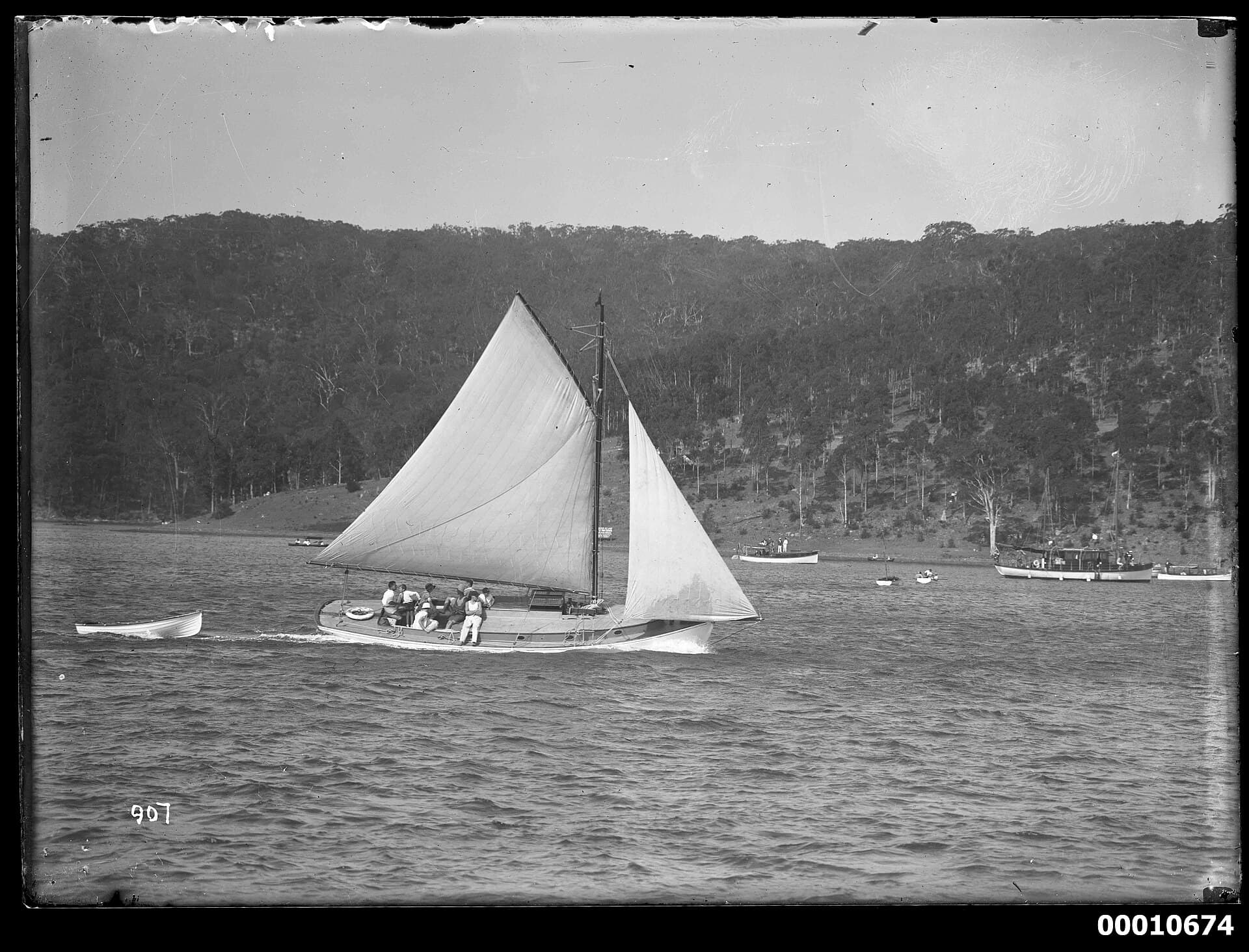
Photo: Australian National Maritime Museum on The Commons, No restrictions, via Wikimedia Commons
4 min read
The Marlay Point Overnight Race is Australia's only overnight race for trailer-sailers — a Gippsland Lakes institution run every March long weekend since 1969, sending a fleet of small yachts racing through the night across the lakes of eastern Victoria. Often called "the Sydney to Hobart for trailer-sailers", it turns boats you tow to the water on a trailer into the stars of a genuine endurance classic, and it remains one of the most loved fixtures in Australian trailer-sailer sailing.
What it is
At heart the Marlay Point Overnight Race is exactly what its name promises: a race that runs overnight. The fleet starts in the evening and sails through the dark, across the broad, shallow expanse of the Gippsland Lakes, with the leading boats finishing the next morning. That single feature — a whole fleet of small yachts out racing at night — is what sets it apart from almost every other event on the Australian calendar.
It is built around trailable yachts, the trailer-sailers and small keelboats that owners tow behind a car and launch at a ramp, along with multihulls. That accessibility is the point. The Marlay Point race takes a class of boat usually associated with day-sailing and club racing and hands it a serious overnight challenge, which is why it draws crews from well beyond Gippsland. If you are new to the different tiers of the sport, our explainer on one-design yacht racing and the broader grand-prix scene helps place where the trailer-sailer world sits.
History
The idea was first raised at a Lake Wellington Yacht Club committee meeting in August 1968, as a way to foster interest in night sailing. From that meeting came the "Marathon Inland Yacht Race", first run on the March long weekend in 1969. Twenty-nine yachts entered and twenty-seven finished — a modest start for what would become a Victorian classic. The inaugural line-honours winner was a Flying Fifteen named Reliance 11.
The race grew quickly. By 1987 it had reached a remarkable peak of 680 boats on the start line, a fleet size that ranks it among the largest mass-participation sailing events the country has seen. Over the decades since, thousands of sailors have made the overnight passage, cementing the event's status as a must-do for the trailer-sailer community.
The course
The course is a passage across the Gippsland Lakes, starting at Marlay Point on Lake Wellington. The original 1969 route ran from Marlay Point through the narrow McLennan Straits into Lake Victoria, then on through Lake King to finish at Metung. From 1976 the finish was moved to Paynesville to accommodate the swelling fleet, and the race has been associated with that part of the lakes since.
What makes the course interesting is the contrast it packs in. There are wide-open stretches of lake where boats can stretch their legs, broken up by the pinch points of the straits, where a large fleet must funnel through in the dark. Add a March evening's shifting breeze and the navigational demands of sailing by light and instrument overnight, and a race that looks simple on a map becomes a real test of seamanship.
The boats and the overnight challenge
The defining challenge of Marlay Point is not raw speed but endurance and seamanship in small boats, at night. Crews must manage navigation through the straits, cold and fatigue through the small hours, and the constant trimming that keeps a light trailer-sailer moving in soft breeze — all the skills covered in our guide to crew positions, compressed into one long night.
Because the boats are small and the racing is close, results turn on consistency and good decisions rather than expensive gear. That is a large part of the appeal: the Marlay Point race is one of the few places where a well-sailed trailer-sailer can win a famous race outright. For the language you will meet in the sailing instructions and results, our sailing terms glossary is a useful companion.
How to follow and enter
Entries and event information are published through the official Marlay Point Overnight Race website and the organising clubs, Lake Wellington Yacht Club and Gippsland Lakes Yacht Club. Crews towing a trailer-sailer to Gippsland should read the Notice of Race carefully, check the safety requirements for an overnight event, and enter before the published deadline. For a sense of how fixtures like this fit into a wider season, see our racing program.
Frequently asked questions
- When is the Marlay Point Overnight Race held?
- The race is held each year on the March long weekend, on the Gippsland Lakes in eastern Victoria. As the name says, it is an overnight race — the fleet sets off in the evening and the boats race through the night, with the leaders typically finishing the following morning.
- Where does the Marlay Point Overnight Race start and finish?
- The race starts at Marlay Point on Lake Wellington and crosses the Gippsland Lakes to the finish. The original 1969 course finished at Metung, running through the McLennan Straits into Lake Victoria and on through Lake King. From 1976 the finish was relocated to Paynesville to cope with the growing fleet.
- What kind of boats race at Marlay Point?
- The Marlay Point Overnight Race is run for trailable yachts — trailer-sailers — along with small keelboats and multihulls. It is billed as the only overnight race for trailer-sailers in Australia, which is a large part of what makes it unique on the calendar.
- How did the Marlay Point Overnight Race start?
- The concept was discussed at Lake Wellington Yacht Club in August 1968 to foster interest in night sailing, and the first race was run on the March long weekend in 1969 as the 'Marathon Inland Yacht Race'. Twenty-nine yachts entered the inaugural event and twenty-seven finished.
- Why is it called the 'Sydney to Hobart for trailer-sailers'?
- The race has earned that reputation because it is the great overnight classic for small-boat sailors — a genuine endurance challenge in boats you tow to the water on a trailer. At its peak in 1987 the event drew 680 boats, and over its history thousands of sailors have made the overnight passage a bucket-list event.
- Who organises the Marlay Point Overnight Race?
- The race is run jointly by the Lake Wellington Yacht Club, which founded it in 1969, and the Gippsland Lakes Yacht Club. The two clubs formalised a partnership in 2017, with Gippsland Lakes Yacht Club taking the major organising role from 2019 onward.
- What makes overnight racing on the Gippsland Lakes challenging?
- Sailing through the night brings navigation, fatigue and cold into play in a way day racing does not, and the Gippsland Lakes add their own test — the fleet must thread the narrow McLennan Straits between open stretches of water, often in shifting breeze, with crews steering by lights and instruments in the dark.
More regattas
Cock of the Bay
The Cock of the Bay is the Ocean Racing Club of Victoria's Boxing Day dash across Port Phillip — a roughly 21-nautical-mile sprint from Port Melbourne to Mornington.
Read the guideFestival of Sails: Geelong's Australia Day Regatta
The Festival of Sails is one of Australia's largest keelboat regattas, run by the Royal Geelong Yacht Club on Corio Bay over the Australia Day long weekend each January.
Read the guideMelbourne to Devonport Yacht Race (The Rudder Cup)
The Melbourne to Devonport Yacht Race is Australia's oldest ocean race — 195nm across Bass Strait from Port Phillip for the historic Rudder Cup, run by the ORCV.
Read the guide