2 min read · Updated 18 June 2026
The two ways a sailing hull behaves at speed come down to this: a displacement hull pushes through the water and is capped by its hull speed, while a planing hull is light and powerful enough to climb onto its own bow wave and skim the surface — leaving that limit behind. It is one of the most important ideas in hull design, and it separates a heavy cruiser from a modern raceboat.
Displacement hulls and the hull-speed limit
A traditional displacement hull moves by shouldering water aside — it "displaces" its own weight in water and pushes that bulk along. That works well up to a point, but it runs into a wall called hull speed. As the boat speeds up it makes a bow wave and a stern wave; near hull speed the boat sits in the trough between them, effectively trying to sail uphill out of a hole it has dug. Hull speed is set by waterline length — roughly 1.34 × √(waterline length in feet), in knots — and pushing past it costs disproportionate extra power. For a heavy displacement boat, that is the practical speed ceiling.
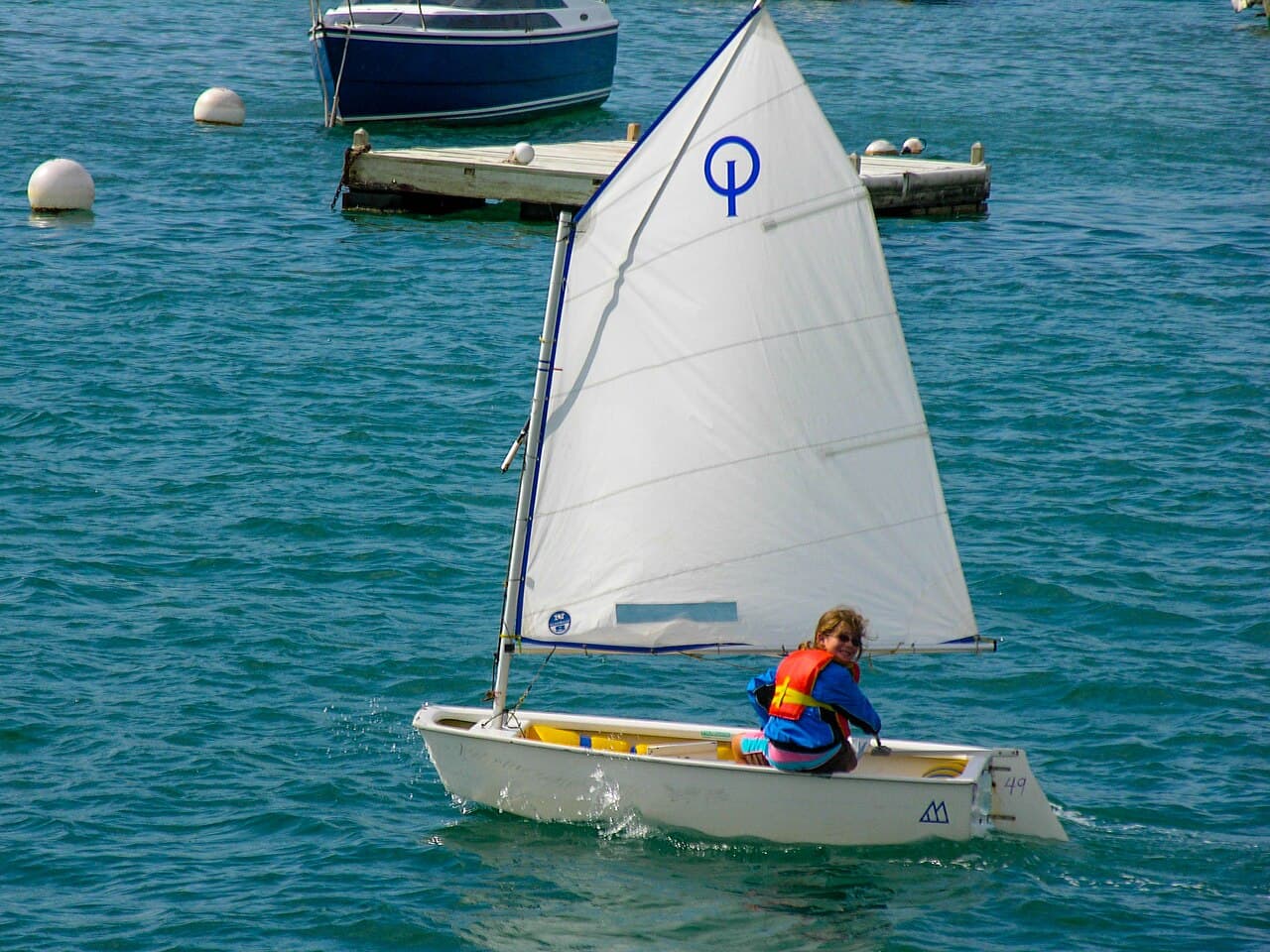
Planing hulls escape it
A planing hull breaks free of that limit. Given enough power for its weight — plenty of sail, a light structure and flatter sections aft — the boat can generate hydrodynamic lift and rise up onto the surface, skimming on its flat after-sections rather than ploughing through. Drag suddenly drops, and the boat surges forward. This usually happens off the wind in a good breeze, when a light boat accelerates, lifts, and takes off — the exhilarating moment a sportsboat "gets up and goes".
The Melges 40 is a planing boat: light, powerful, and shaped to lift onto the surface and skim at high speed, the hallmark of the sportsboat and modern grand-prix one-design. Many boats sit between the two extremes — semi-displacement hulls that partly lift but don't fully plane.
Planing vs foiling
It is worth being precise: planing is not foiling. A planing hull stays in contact with the water, just lifted and skimming with less of it wetted. A foiling boat rises clear of the surface on underwater wings. Planing reduces drag; foiling nearly eliminates it. The Melges 40 planes; an America's Cup AC75 foils. For the rest of the vocabulary, see the sailing terms glossary.
Frequently asked questions
- What is the difference between a displacement and a planing hull?
- A displacement hull moves by pushing water aside, and is limited by its hull speed — a maximum set by its waterline length. A planing hull is light and powerful enough to lift up and skim across the surface of the water as it speeds up, climbing over its own bow wave and escaping the hull-speed limit, so it can go much faster.
- What is hull speed?
- Hull speed is the natural speed limit of a displacement hull, set by the length of its waterline — roughly 1.34 times the square root of the waterline length in feet, giving a speed in knots. As a displacement boat approaches hull speed it gets trapped in the trough between its own bow and stern waves, and pushing past it costs enormous extra power.
- How does a boat get up on the plane?
- When a light boat has enough power for its weight — enough sail and a flat enough hull aft — it can generate hydrodynamic lift and rise up onto the surface, skimming on its flatter sections rather than pushing through. This is planing. It usually happens off the wind in a good breeze, when the boat accelerates, lifts, and surges forward as drag suddenly drops.
- Is the Melges 40 a planing boat?
- Yes. The Melges 40 is a high-performance planing monohull — light, powerful and with a hull shaped to plane, so off the wind in a breeze it lifts onto the surface and skims at high speed rather than being held back by hull speed. Planing performance is central to how modern sportsboats and Grand Prix one-designs sail.
- What is the difference between planing and foiling?
- A planing hull skims along the surface of the water, with the hull still in contact but lifted and dragging less. A foiling boat rises entirely clear of the water on underwater wings. Planing reduces drag; foiling almost eliminates it. The Melges 40 planes; boats like the America's Cup AC75s foil.