2 min read · Updated 18 June 2026
Foiling is when a boat rises out of the water and rides on hydrofoils — small underwater wings — as it speeds up. Lifting the hull clear of the surface almost eliminates drag, unlocking speeds that were unimaginable a generation ago. It is the headline technology of modern high-performance sailing, though it is worth being clear from the start: not every fast boat foils.
How a hydrofoil works
A hydrofoil is a wing that operates in water instead of air, and it obeys the same physics as an aircraft wing. As the boat moves forward, water flows over the angled foil and generates lift. Crucially, that lift grows with speed: the faster the boat goes, the harder the foil pushes up. Past a certain speed the lift exceeds the boat's weight, the hull rises clear of the water, and the boat "flies" — supported entirely by the foils and rudder.
Why it is so fast
Most of a sailing boat's resistance comes from its hull dragging through the water. Lift the hull out and that drag nearly disappears, leaving only the slim foils and rudder wetted. With so little resistance, the same wind power drives the boat far faster — foiling boats routinely sail faster than the true wind and hit speeds a displacement hull could never reach. The catch is control: flying a boat demands constant fine adjustment of foil angle and ride height, and a foiling boat at speed is a demanding, sometimes unforgiving machine.
Which boats foil
Foiling has spread across the sport:
- Moth dinghies — the pioneers of mainstream foiling
- America's Cup AC75s — foiling monohulls
- IMOCA 60s — offshore racers using foils for lift assist
- Nacra and other foiling catamarans, plus foiling kite and windsurf boards
Foiling vs planing
It is important not to confuse foiling with planing. A planing boat doesn't fly — it skims along the surface of the water as it speeds up, its hull lifting and the wetted area shrinking, but the hull stays in contact with the water. Foiling lifts the hull clear of the surface entirely. Both reduce drag at speed, but they are different techniques.
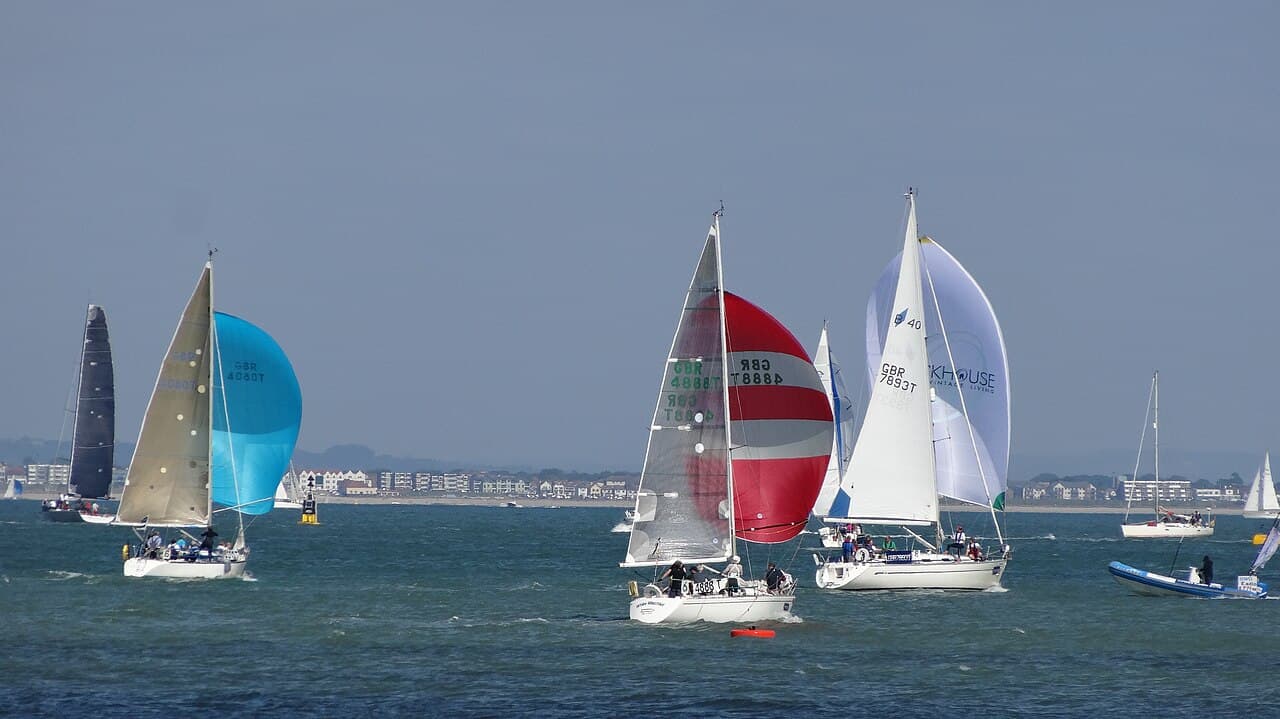
The Melges 40 is a planing boat, not a foiler — a light, powerful planing monohull with a canting keel and twin rudders that gets its speed by skimming the surface. Understanding that distinction is part of understanding where any fast boat sits. For more terms, see the sailing terms glossary.
Frequently asked questions
- What does foiling mean in sailing?
- Foiling is when a boat rises up out of the water and rides on hydrofoils — small underwater wings — as it gains speed. Once flying, only the foils and rudder are in the water, so the hull's drag disappears and the boat can go dramatically faster. It is the technology behind the fastest modern racing boats.
- How do hydrofoils work?
- A hydrofoil works like an aircraft wing, but in water. As the boat moves forward, water flowing over the angled foil generates lift. The faster the boat goes, the more lift the foil produces, until that lift exceeds the boat's weight and the hull rises clear of the surface. The boat then 'flies' on the foils, with vastly less drag than a hull pushing through water.
- Why does foiling make boats so fast?
- Most of a sailing boat's drag comes from the hull moving through water. Lift the hull clear and that drag almost vanishes, leaving only the slim foils and rudder wetted. With so little resistance, the same sail power drives the boat much faster — foiling boats routinely sail faster than the wind and reach speeds impossible for displacement hulls.
- Which boats foil?
- Foiling is used by the Moth dinghy, the America's Cup AC75s, offshore IMOCA 60s (which use foils for lift assist), the Nacra and other foiling catamarans, and many modern kite and windsurf boards. Not all fast boats foil, though — many high-performance yachts, including the Melges 40, are planing boats that skim the surface rather than flying clear of it.
- Is the Melges 40 a foiling boat?
- No. The Melges 40 is a high-performance planing monohull with a canting keel and twin rudders — it gets its speed from a light, powerful, planing hull, not from lifting clear of the water on foils. Foiling and planing are different ways of reducing drag at speed; the Melges 40 belongs to the planing family.