2 min read · Updated 18 June 2026
A keelboat is a sailing boat with a fixed, weighted keel beneath the hull — the ballast that keeps it upright and stops it capsizing. It is the basic building block of most of the sport: cruising yachts, club racers and ocean-racing machines are nearly all keelboats. The term describes how the boat is kept stable, not how big it is, which is why it covers everything from a small trailerable yacht to a 30-metre offshore maxi.
What makes a keelboat
The defining feature is the keel — a fin projecting down from the bottom of the hull, with weight (ballast) concentrated low down. That ballast lowers the boat's centre of gravity, so when the wind tries to push the boat over, the weighted keel pulls it back upright. The result is a stable boat that is very difficult to capsize and can carry sail safely in a breeze.
The keel does a second job too: its fin shape resists the water as the wind tries to push the boat sideways, letting the boat convert wind into forward motion and sail efficiently towards the wind rather than slipping to leeward.
Keelboat vs dinghy
The clearest contrast is with a dinghy:
| Keelboat | Dinghy | |
|---|---|---|
| Stability | Fixed ballasted keel keeps it upright | Kept upright by crew weight |
| Size | Larger, from ~5 m to 30 m+ | Small and light |
| Crew | Usually a team | One or a few |
| Capsize | Very hard to capsize | Capsizes readily |
Dinghies are brilliant for learning feel and quick reactions because every input is immediate. Keelboats are where most adults enter the sport and where most racing happens — see how to get into sailing for both routes.
Keelboats in racing
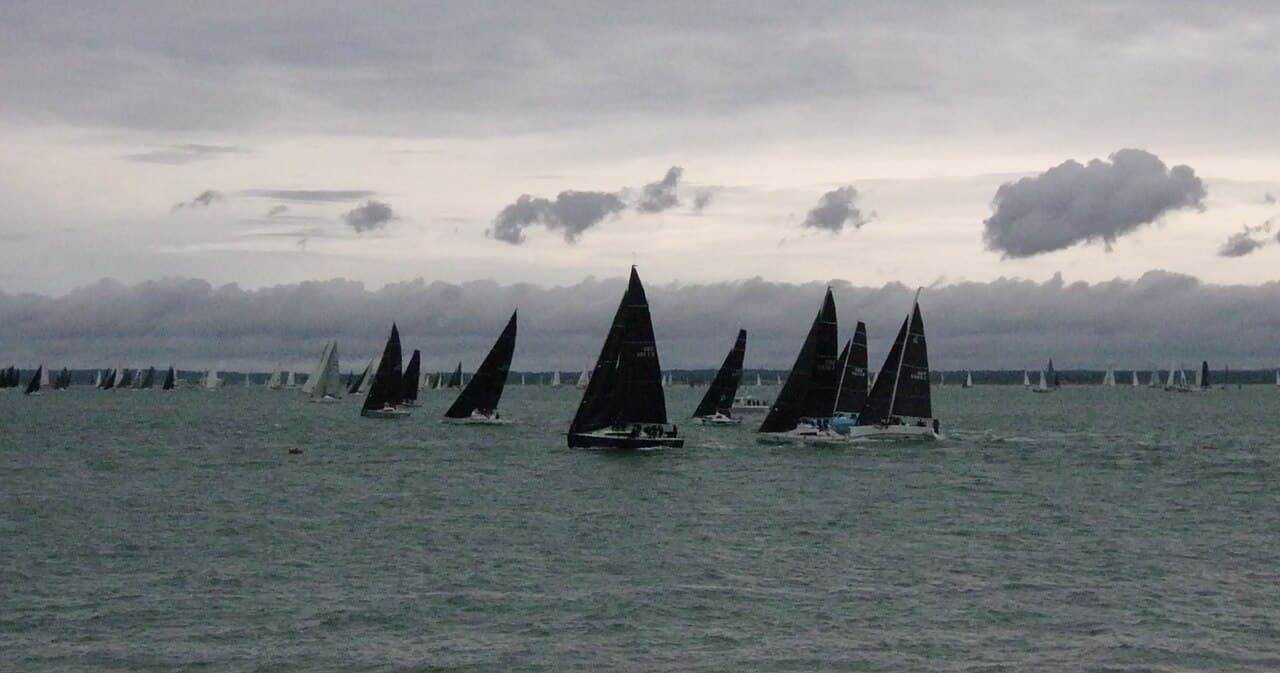
Almost all the racing covered across these guides is keelboat racing, from club fleets to grand-prix one-design classes and offshore classics. In one-design racing, identical keelboats race boat-for-boat. High-performance racing keelboats use deep, efficient keels, and some — including the Melges 40 — use a movable canting keel that swings the ballast to windward to resist heeling even harder. At the small end, trailer sailers are keelboats light enough to tow; at the large end sit the maxi yachts. For the wider vocabulary, see the sailing terms glossary.
Frequently asked questions
- What is a keelboat?
- A keelboat is a sailing boat with a fixed, weighted keel under the hull. The keel's ballast lowers the boat's centre of gravity, keeping it upright and resisting the sideways push of the wind, so the boat is stable and very hard to capsize. Most cruising yachts and offshore racing yachts are keelboats.
- What is the difference between a keelboat and a dinghy?
- A keelboat has a heavy fixed keel that keeps it upright, while a dinghy is a small, light boat with no ballast, kept upright by the crew's weight and skill. Dinghies are responsive and can capsize easily; keelboats are larger, more stable, and crewed by a team. Most adults who race join the sport on keelboats.
- What does the keel do?
- The keel does two jobs. Its weight, low under the hull, provides ballast that counteracts the heeling force of the wind and keeps the boat upright. Its fin shape also resists sideways slip through the water, allowing the boat to sail efficiently towards the wind rather than being blown sideways.
- How big is a keelboat?
- Keelboats range widely, from small trailerable yachts of around 5 to 8 metres up to ocean-racing maxis of 30 metres or more. The defining feature is the fixed ballasted keel, not the size, so the term covers everything from a club racer to a Grand Prix offshore yacht.
- Are racing yachts keelboats?
- Yes. Almost all keelboat racing — from club racing to Grand Prix one-design and offshore classics like the Sydney Hobart — is sailed in keelboats. High-performance racing keelboats use deep, efficient keels, and some use a movable canting keel to maximise the righting effect of the ballast.