Sydney to Gold Coast Yacht Race
The Sydney to Gold Coast Yacht Race is a 384-nautical-mile offshore passage from Sydney Harbour to the Gold Coast, run by the CYCA each winter and known as The Great Winter Escape.
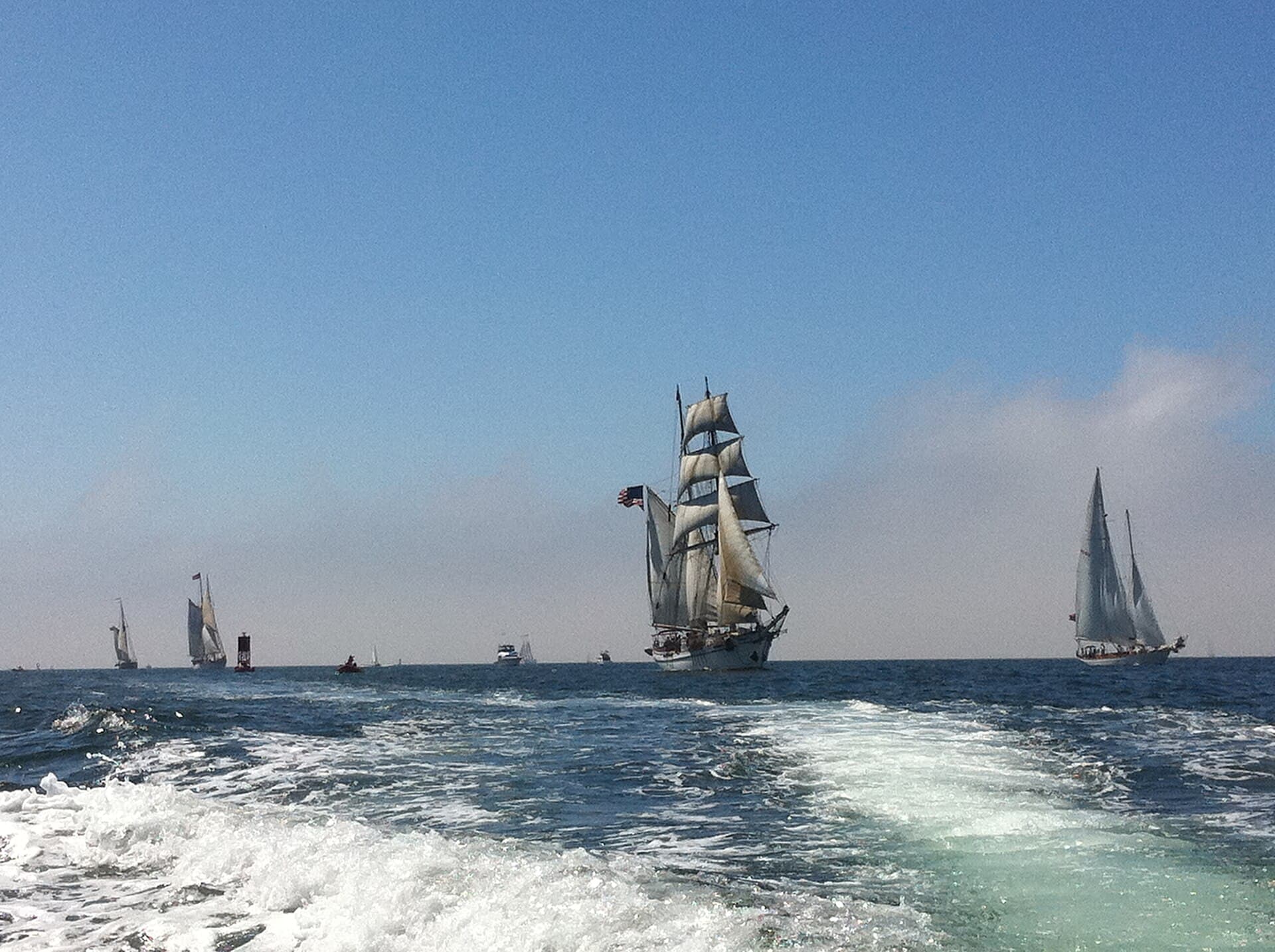
Photo: Port of San Diego, CC BY 2.0, via Wikimedia Commons
6 min read
The Sydney to Gold Coast Yacht Race is a roughly 384-nautical-mile offshore passage race, run each winter by the Cruising Yacht Club of Australia from Sydney Harbour north to the Queensland Gold Coast. Known affectionately as The Great Winter Escape, it sends a fleet of supermaxis, TP52s and cruiser-racers out the Sydney Heads and up the New South Wales coast towards the warmth of Main Beach — a downhill blast in the right conditions, and a cold, lumpy slog in the wrong ones. It opens the CYCA's offshore winter season and serves as an early proving ground for crews with the Sydney Hobart in their sights.
What it is
This is a point-to-point ocean race, not a harbour series. From the start inside Sydney Harbour the boats sail out into the open Tasman and then turn north, sailing for the better part of a day and a half — longer for smaller yachts — until they reach the finish off the Gold Coast. It is classified as a Category 2 offshore race, which sets the safety equipment, crew experience and qualification standards every entry must meet.
The race appeals on two levels. For the big boats it is a sprint for line honours, a chance to push hard up a coast that can deliver fast reaching conditions. For everyone else it is a genuine handicap contest, where navigation, current strategy and boat handling matter more than raw waterline length. It is also a social occasion — the Gold Coast finish, in mid-winter, is a deliberately warm reward for a cold offshore effort. For a primer on the racing concepts behind it, see our grand prix yacht racing and one-design yacht racing guides.
History
The race was first conducted in 1986, made possible after major harbour works at Southport opened the notorious bar to deep-keeled yachts. The inaugural fleet of more than 80 boats was sent north, with the maxi Apollo among the early benchmarks. The event quickly established itself as a fixture of the Australian winter calendar.
Over the decades it has been backed by a succession of title sponsors and has carried several official names, but the character has stayed constant — a winter dash from the country's premier offshore club to a holiday coastline. The CYCA has also used the race as part of the build-up to the Rolex Sydney Hobart, with many crews treating it as an early-season qualifier and shakedown. In that sense the Gold Coast race has long been more than a stand-alone event.
The course
The fleet starts inside Sydney Harbour, off the eastern suburbs shoreline, and works down towards the Heads before turning into the open ocean. From there it is essentially a long passage north, hugging or standing off the New South Wales coast depending on where the navigators expect the most favourable breeze and the least adverse current.
Landmarks come and go over the course of the race — the mid-north coast, then Cape Byron, the most easterly point of mainland Australia, before the boats close on the Queensland border. The finish lies off Main Beach on the Gold Coast, in the waters near the Gold Coast Seaway and Southport. The East Australian Current and the timing of any winter front are the two great variables. Get them right and the trip can be a fast, warm reach; get them wrong and the fleet can be left parked in light air or punching into a southerly change. The relevant sailing vocabulary is unpacked in our sailing terms glossary.
The fleet and classes
Few Australian races assemble such a wide spread of boats. At the front are the maxis and supermaxis that contest line honours and have, in fast years, produced blistering elapsed times. Behind them sits a deep middle band of grand-prix racers such as TP52s, then a large group of cruiser-racers and production boats typically in the forty-to-fifty-foot range, which make up the bulk of the entry.
Recent fleets have also featured a healthy number of double-handed entries and occasional international competitors. Results are scored across multiple handicap systems so that very different boats can each race for a meaningful prize — see IRC vs ORC handicap racing for how those systems differ. While this race is open to many designs rather than a single class, the broader principles of strict one-design competition are explained in our Melges 40 explained guide.
Line honours vs handicap
As in every major Australian offshore race, there are two prizes that matter most. Line honours is the simple one — the first boat to cross the finish line wins it, and in this race that is almost always one of the largest maxis, which can complete the course well inside two days. It is the result that makes the news, because it is about outright speed.
The overall win, however, is decided on handicap. Each yacht carries a rating that reflects its expected performance, and that rating is applied to its elapsed time to produce a corrected result. This is how a well-sailed forty-footer can beat a much larger boat overall, despite finishing many hours later. Our line honours vs handicap guide explains exactly how the two systems work and why the handicap winner is often considered the truest test of seamanship.
How to enter
Entry is managed by the Cruising Yacht Club of Australia, with a notice of race and entry portal published ahead of each edition. Because it is a Category 2 offshore race, boats and crews must meet defined safety, equipment and qualification standards before they are accepted — this is not an event to enter casually. Owners should review the current requirements early, ensure their safety audit is in order and confirm crew experience well before the entry deadline. Many crews use the race deliberately as a qualifier and shakedown ahead of the Sydney Hobart. You can see where it sits in the wider season on our programme, and read about the boat behind this site on the boat page.
How to follow
For spectators, the start inside Sydney Harbour is the highlight — the CYCA streams it live, and harbourside vantage points give a close view of the fleet making for the Heads. Once the boats are offshore, an online tracker lets you watch positions update through the night as the leaders push north. At the other end, the finish off Main Beach can be followed from the Gold Coast foreshore, where the first maxis typically arrive within a day and a half of the gun. Between the live start, the tracker and the steady flow of results across the handicap divisions, it is an easy race to follow from anywhere.
Frequently asked questions
- How long is the Sydney to Gold Coast Yacht Race?
- The course is approximately 384 nautical miles, running from a start inside Sydney Harbour, out the Heads, and then north up the New South Wales coast to a finish off Main Beach on the Queensland Gold Coast. It is a true offshore passage race rather than a series of harbour windward-leewards.
- Who organises the Sydney to Gold Coast Yacht Race?
- The race is organised by the Cruising Yacht Club of Australia (the CYCA), the Sydney club that also runs the Rolex Sydney Hobart Yacht Race. The CYCA has presented the Gold Coast race since its inception and it opens the club's winter offshore calendar.
- When was the Sydney to Gold Coast Yacht Race first held?
- The inaugural race was conducted in 1986, after harbour works at Southport opened the bar to deep-keeled yachts and made a Gold Coast finish practical. A fleet of more than 80 yachts started that first edition, and the race has been a fixture of the Australian winter calendar ever since.
- When does the race start each year?
- It is traditionally run around late July, in the depths of the southern winter, which is why it carries the nickname The Great Winter Escape as the fleet heads north towards warmer Queensland weather. Sailors should always confirm the exact date and start time for a given year with the CYCA, as scheduling can shift slightly from season to season.
- Where does the race start and finish?
- It starts inside Sydney Harbour, with the fleet working down towards the Heads before turning north into the open ocean. The finish lies off Main Beach on the Gold Coast, close to the Gold Coast Seaway and Southport, after the boats have run the full length of the New South Wales coast.
- What is the difference between line honours and handicap in this race?
- Line honours goes to the first boat physically across the finish line, which is almost always one of the largest and fastest maxis. The handicap result is calculated by applying each yacht's rating to its elapsed time, so a much smaller boat that sails well for its size can win overall on corrected time even though far bigger yachts finished hours ahead.
- What kinds of boats compete in the Sydney to Gold Coast Yacht Race?
- The fleet is a broad mix, from large supermaxis chasing line honours down to production cruiser-racers in the thirty-to-fifty-foot range. Recent editions have included TP52s, double-handed entries and international competitors, with results scored across IRC, ORC and performance-handicap divisions.
- How can I follow the Sydney to Gold Coast Yacht Race?
- The CYCA streams the harbour start live and provides an online fleet tracker so you can watch positions update as boats work their way north. Spectators often line Sydney's harbourside vantage points for the start, while the finish can be watched from the Main Beach foreshore on the Gold Coast.
- Is the Sydney to Gold Coast Yacht Race a qualifier for the Sydney Hobart?
- It is widely used as an early-season tune-up and qualifying passage for crews preparing for the Rolex Sydney Hobart later in the year. As a Category 2 offshore race it carries serious safety and equipment requirements, and the CYCA has long used it as part of the build-up to the Hobart.
More regattas
Rolex Sydney Hobart Yacht Race
The Rolex Sydney Hobart is a 628-nautical-mile offshore classic from Sydney to Tasmania, run by the CYCA and starting every Boxing Day.
Read the guideBrisbane to Gladstone Yacht Race
The Brisbane to Gladstone is a 308-nautical-mile Easter ocean classic run since 1949 by the Queensland Cruising Yacht Club, from Moreton Bay to Gladstone Harbour.
Read the guideSail Paradise
Sail Paradise is Southport Yacht Club's signature offshore regatta on the Gold Coast, with windward-leeward and passage racing across multiple divisions over a long weekend.
Read the guide