2 min read · Updated 19 May 2026
In sailing, windward is the side or direction the wind is blowing from — the weather side — and leeward (often said "loo-ard") is the side it blows towards, the sheltered side. Almost everything on the water is described relative to these two: which side a sail sits, which boat must give way, which way to lean the crew. They are among the first terms to learn and among the most important in racing, underpinning both the points of sail and the rules.
What the terms mean
Picture the wind arriving at the boat. The side it hits first is windward — the weather side, the upwind side. The side in the boat's wind shadow, where the wind is heading, is leeward — the sheltered, downwind side. A boat, mark or gust "to windward" is upwind of you; one "to leeward" is downwind.
The same words scale up to the racecourse and the geography around it: a headland to windward is upwind, and crews talk about the windward mark (the upwind turning point) and the leeward mark (the downwind one) on every lap.
Why it matters: right of way
The windward and leeward distinction is not just description — it sets one of the central rules of racing. When two boats are on the same tack and overlapped, the windward boat must keep clear of the leeward boat; the leeward boat has right of way. That single rule shapes much of the close-quarters tactics in a fleet, from defending a lane to forcing a rival up. Which tack a boat is on, in turn, depends on which side the wind crosses — closely tied to port and starboard.
Windward and leeward in racing
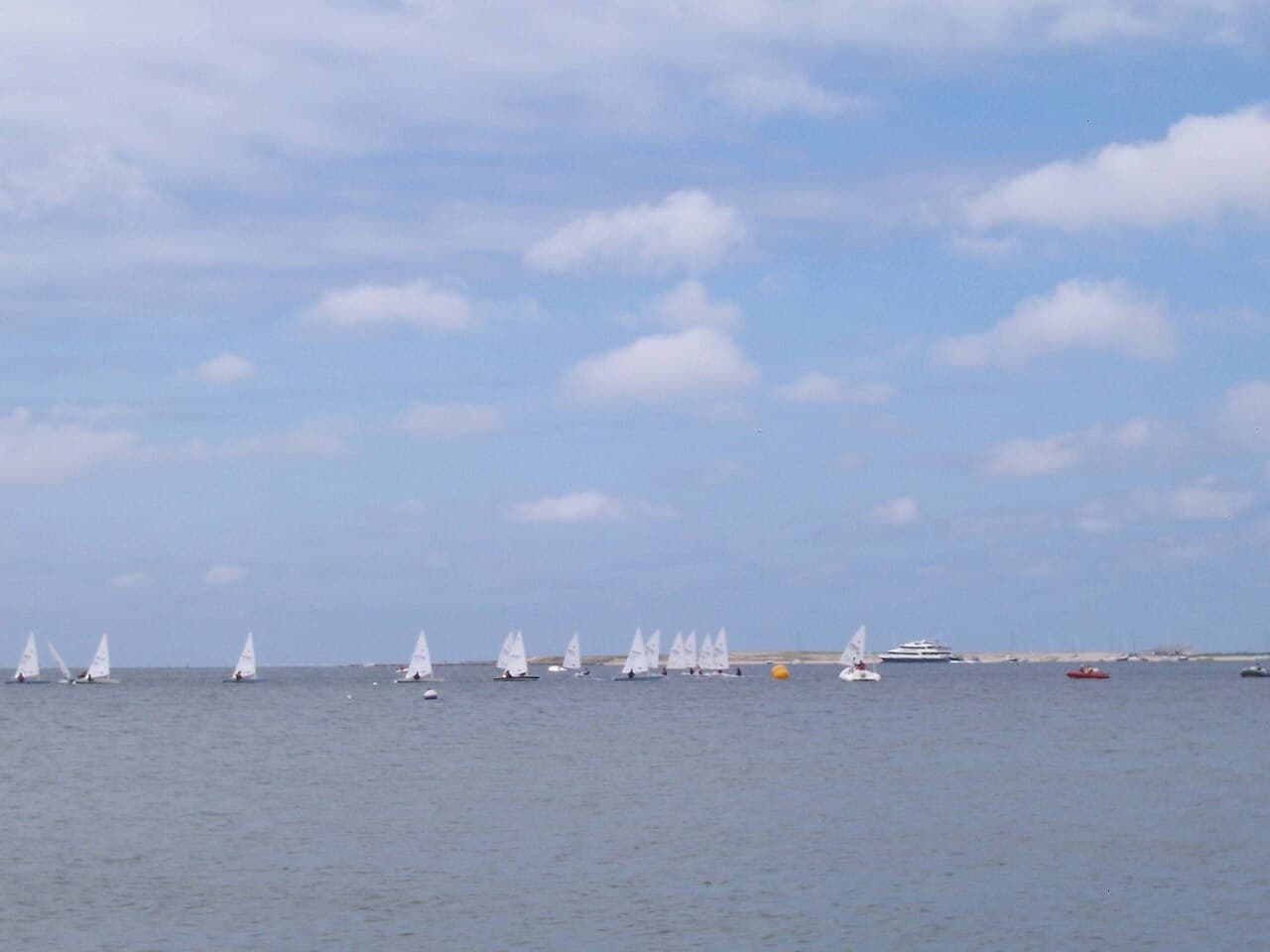
Because position relative to the wind is so decisive, races are often built around it. A windward-leeward course sends the fleet straight upwind to a windward mark and straight back down to a leeward mark, repeated for several laps — the standard format for grand prix one-design racing, because it tests pure upwind and downwind speed and tactics. Holding the windward position for clear air, or the leeward position for right of way, is a constant calculation. For the wider vocabulary, see the sailing terms glossary.
Frequently asked questions
- What does windward mean in sailing?
- Windward means the side or direction from which the wind is blowing — the weather side of the boat. A boat or object to windward is upwind of you. The opposite is leeward, the sheltered side that the wind blows towards.
- What does leeward mean in sailing?
- Leeward, often pronounced loo-ard, means the side or direction the wind is blowing towards — the sheltered, downwind side. The leeward side of a boat is the one away from the wind, opposite the windward side. A mark or boat to leeward is downwind of you.
- What is the windward-leeward right-of-way rule?
- When two boats are sailing on the same tack and overlapped, the windward boat — the one closer to the wind — must keep clear of the leeward boat. The leeward boat has right of way. It is one of the most important rules in close racing, governing how boats may push each other up or hold a lane.
- Why do the terms windward and leeward matter in racing?
- They define position relative to the wind, which drives both tactics and the rules. Being to windward can offer clear air and a controlling position, while the leeward boat holds right of way under the rules. Race courses are even named for them — a windward-leeward course runs straight upwind and back down.